What Your Body Remembers: How Attachment Wounds Get Stored in the Nervous System
You know, on some level, where your patterns come from.
Maybe you even know it in detail — the childhood that was unpredictable, the parent who was loving one moment and frightening the next, the early relationships that taught you it wasn't safe to need things from people. You've talked about it. You've thought about it. You might have years of therapy behind you in which you understood yourself more and more clearly.
You still brace before asking for what you need. Still feel that wash of panic when someone goes quiet. Still find yourself shutting down precisely when closeness is within reach.
The reason this happens isn't a failure of insight or effort. It's that attachment wounds aren't stored primarily in your narrative memory — in the story you can tell about what happened. They're stored in your body. In your nervous system. In the automatic, below-conscious processes that govern how you move through every relationship you have.
Understanding this changes what healing has to look like.
How the body encodes early experience
Before you had language, before you could form explicit memories that could later be recalled and examined, you were already learning.
Your earliest relationships — particularly with your primary caregivers — were teaching your nervous system what the world was like. Whether reaching out for comfort was met with warmth or withdrawal. Whether distress brought soothing or more distress. Whether the people you depended on were reliable, frightening, or somewhere in between.
This learning didn't happen through thought. It happened through repeated experience, encoded in the body as felt sense — as physical patterns of tension and release, approach and withdrawal, activation and shutdown. As a very young human, your nervous system was doing something remarkable: it was building a model of how relationships work, and it was building it from the inside out, in flesh and bone and neural pathway.
Attachment theory calls the result of this learning an internal working model — a largely unconscious set of expectations about what relationships will be like, how safe it is to depend on others, and what you need to do to maintain connection. These expectations become the lens through which every subsequent relationship is processed.
What neuroscience has added to this picture is the understanding that those expectations are not just mental. They're physiological. They live in the body as pattern — as the specific tension that arises when you try to ask for help, as the shutdown that comes over you when conflict feels inescapable, as the vigilance that makes it impossible to relax even when someone genuinely loves you.
The nervous system as a relational archive
Think of your nervous system as an archive of every relationship you've ever had — weighted heavily toward the earliest and most formative.
Every time your caregiver responded to your distress with warmth, your nervous system encoded: connection is safe, reaching out works, comfort is available. Every time your reach for comfort was ignored, punished, or met with unpredictability, your system encoded something different: connection is risky, needs are dangerous, I must manage alone.
These encodings aren't memories in the way we usually mean the word. You can't access them as specific scenes with narrative coherence. But they're present — expressing themselves as the automatic pulls and resistances that shape your relational life: who you're drawn to, what makes you pull away, how much closeness you can tolerate before something in you retreats.
And because they were encoded before language, they can't be fully addressed through language alone. This is the core challenge of healing attachment wounds through talk therapy: the very medium of treatment (words, reflection, narrative) is different from the medium in which the wound is stored (sensation, pattern, automatic response).
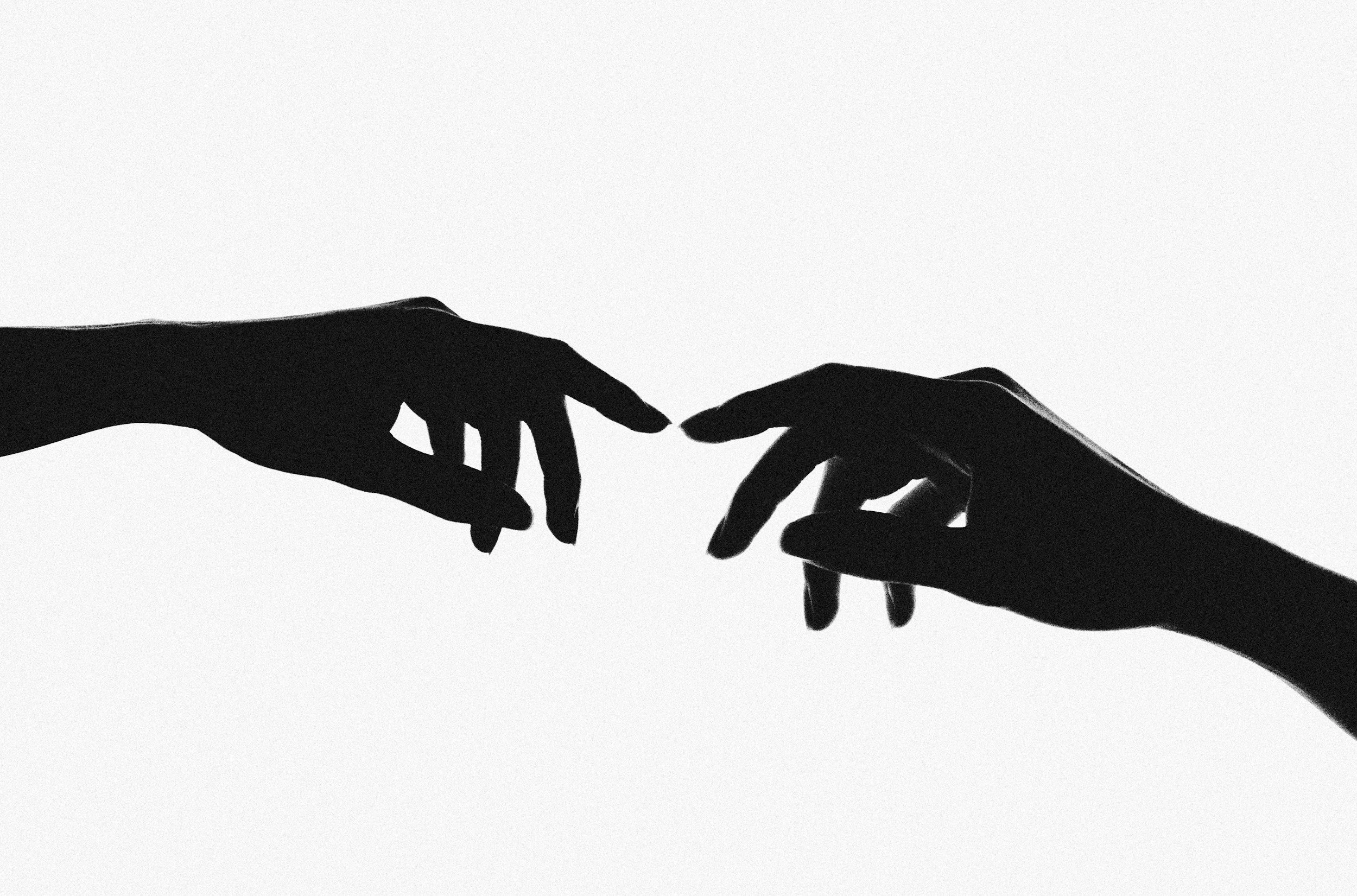
What it feels like when attachment wounds live in the body
The body's version of attachment distress has particular textures that are worth naming, because so many people experience them without understanding what they are:
The brace before asking. A tightening in the chest or throat when you're about to ask for something you need — so subtle and so familiar you might not notice it. The body anticipating rejection before the mind has consciously gone there.
The monitoring scan. A constant, low-level tracking of the people around you — their mood, their facial expression, the quality of their silence — looking for early warning signs of something going wrong. This is the nervous system doing its threat-detection job in a relational context. It's exhausting in a way that's hard to explain to someone who doesn't do it.
The collapse into shutdown. When emotional intensity gets high enough, or when closeness feels too close, something drops. You go flat, or numb, or suddenly very tired. It's not something you chose. It happens before the choice arrives.
The push-pull. The simultaneous longing for closeness and the terror of it — wanting to be seen, known, loved, and wanting to run from the vulnerability that requires. This is the signature of disorganized attachment: the source of comfort and the source of fear learned to be the same thing.
The physical residue of old relational pain. Chronic tension in the shoulders, jaw, stomach. A body that doesn't know how to fully exhale. A baseline of vigilance that doesn't match the actual level of threat in your current life.
None of these are character flaws. They are the body's honest record of what it learned about relationships — and they're information, not sentences.
Why somatic work is part of the answer
If attachment wounds are stored in the body, healing them requires reaching the body — not just the story the mind tells about what happened.
This is where somatic therapy becomes relevant. Somatic attachment therapy works specifically at the intersection of body-based approaches and attachment healing. Rather than only examining patterns through the retrospective lens of narrative, it engages with what's happening in real time — the tension that arrives when you try to talk about needing something, the contraction in the chest when you imagine reaching out, the relief (if any) that's available when something genuinely safe is offered.
By working slowly and carefully with these physical expressions of old relational learning, the nervous system begins to take in new information. Not as a new thought — but as a new experience. The body starts to learn, through the accumulation of safe relational encounters, that things are different now. That it's possible to reach and be met. That closeness doesn't require bracing.
This learning is slow by necessity. The nervous system doesn't update its deepest models from a single positive experience — just as it didn't form them from a single negative one. But it does update. Given the right conditions, with enough repetition, the body revises what it thought it knew about relationship.
That revision is what lasting change in attachment patterns actually looks like.
If you're in Denver or anywhere in Colorado and you're ready to work with your attachment patterns at the level where they actually live, I offer somatic attachment therapy that works directly with the nervous system and body. Schedule a free consultation to learn more about whether this approach is right for you.
