What to Expect From Your First Walk and Talk Therapy Session
If you've been curious about walk and talk therapy but aren't quite sure what to picture, you're not alone.
The concept makes intuitive sense — therapy, outside, while walking. But the practical questions are real. Where do you actually meet? What do you wear? What happens if it's cold, or crowded, or you need to cry? Is it strange to do this kind of work in a public place?
This is an honest look at what outdoor therapy actually involves, from the logistics to what the session itself tends to feel like.
Before the Session: Choosing a Location
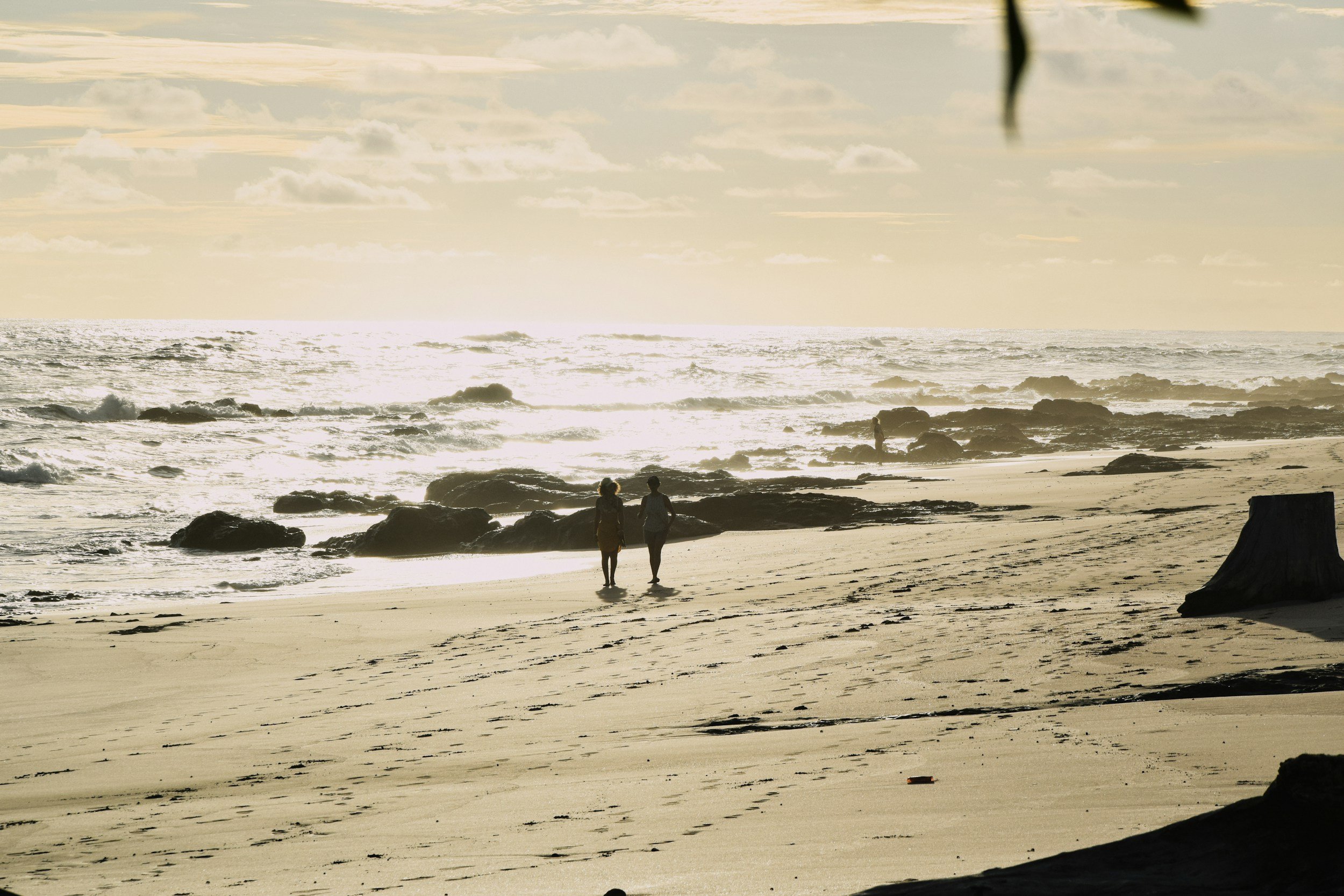
If you're in the north San Diego area, outdoor sessions with me take place along the coast in one of three areas: Del Mar, Solana Beach, or Cardiff by the Sea. Each has a different character, and part of how we'll prepare for your first outdoor session is talking through which feels right for you.
Del Mar Bluffs offers open clifftop walking with long Pacific views. The path is relatively exposed — lots of sky, a sense of spaciousness. Good for people who feel regulated by wide-open vistas and fresh ocean air.
Tide Beach Park and the Pill Box trail in Solana Beach give you coastal access with a bit more structure. The paths are easy, the area tends to be quieter on weekday mornings, and there's a sense of being tucked into the coastline rather than perched above it.
San Elijo Lagoon in Cardiff is different in feel — lagoon-side, through coastal sage and wetland, quieter and more enclosed than the bluffs. Some people find it more grounding precisely because it's less exposed. It's a good option for people who find wide open spaces activating rather than calming.
Before your first outdoor session, I'll send you specific meeting point details — where to park, where to look for me. We start together from that point.
What to Wear and Bring
Nothing special. Whatever you'd wear for a comfortable walk — casual shoes, layers if it's a marine layer morning. You don't need hiking gear or athletic wear. We're not moving fast or covering difficult terrain.
Bring water if you like. That's genuinely it.
You don't need to prepare differently than you would for an office session. The only real practical difference is that you're outside.
How the Session Begins
We'll meet at the agreed spot and start walking from there. I'll typically check in about how you're arriving — what's been happening since we last spoke, what's present for you today, what you're wanting from the session.
From there, it moves the way any session moves. You bring what you bring. We follow what's present.
One thing people often notice in the first few minutes is a kind of settling. The body starts moving, the environment opens up around you, and something that might have felt tight or held on the drive over begins to loosen a little. Not always — some sessions start activated and stay that way — but often there's a shift in the first five to ten minutes that changes what's available.
Pacing and Movement
We walk at your pace. This is therapy, not exercise — the goal isn't covering ground, it's creating conditions for the work. If you need to slow down, we slow down. If you want to stop and stand for a moment, we stop. If something needs to be held still, we can sit.
I'll follow your lead on pace and often on direction, too. Some people find that moving helps them access material; others find that they need to stop walking when something hard surfaces. There's no right way to do it.
Sessions are 50 minutes, the same as a standard individual session.
Privacy and Other People
This is one of the most common questions, and it's a fair one.
We will encounter other people on the path. That's the nature of walking in a public space. I route sessions toward lower-traffic times and areas where possible — weekday mornings tend to be the quietest — and I'm attuned to what we're discussing when others come near. The work naturally adjusts. Some of the most useful moments in outdoor sessions happen in the pauses, when we slow or stop while someone passes and then return to what was being said.
That said, if privacy is a significant concern for you — if you're a public figure, or if you simply feel strongly about not processing personal material anywhere that isn't fully private — it's worth raising before we decide together whether outdoor therapy is the right fit.
What If You Need to Cry?
You cry. Outside.
This comes up often enough to name directly. Grief, relief, release — all of it happens in outdoor sessions, and it doesn't require a box of tissues in the right spot or a door to close. In practice, most people find that crying while walking, or stopping to cry by the water, feels less exposed than they imagined. The environment tends to hold it.
If this is something you're worried about, we can talk about it beforehand and choose a location and time that feels as private as possible.
Weather and Flexibility
San Diego's coastal weather is mostly forgiving, but marine layer mornings can be genuinely cold, and occasionally it rains. We'll always have the option to shift to a telehealth session if the weather isn't cooperating — I'll reach out if conditions look like they might be a problem, and you can always reach out to me.
There's never a penalty for switching formats. The work is what matters; the location serves the work.
How It Tends to Feel
Most people are surprised by how natural it feels.
The side-by-side quality — not sitting across from someone, but moving alongside them — removes a certain kind of social pressure. There's less sense of being watched, evaluated, held in someone's gaze. For people who find direct eye contact activating, or who feel more guarded face-to-face, this can make a meaningful difference in what they're able to say.
The movement itself often helps. Something about having the body in motion makes it easier to stay with difficult material without tipping into overwhelm. You're not just sitting with it — you're literally moving through it.
And the environment — the light, the air, the small sensory details of being outside — tends to keep the window of tolerance a little wider. There's more room.
Is It Right for You?
Walk and talk therapy isn't a universal fit, and that's okay. Some people do their best work in the held, contained quality of an office. Some find the outdoors activating or distracting. Some are working through material that needs more structure than an open trail can provide.
But for people who feel restless or constricted in office settings, who find movement regulating, who have a relationship with nature as part of what grounds them, or who are simply curious — it's often worth trying.
The first outdoor session is always a conversation. If it doesn't feel right, we return to the office without any loss. If it opens something up, we have more options for how the work can happen.
Walk and Talk Therapy in Del Mar, Solana Beach, and Cardiff
I offer outdoor sessions along the north San Diego coast, integrated with the same somatic, IFS, and EMDR-informed approach I bring to all my work. If you're curious about whether this format might be a fit for you, I'd be glad to talk it through.
You can learn more about walk and talk therapy here, or reach out directly to ask questions before committing to anything.
